
The One Test Everyone Runs, and Why It Isn't Enough
Most buyers do the same thing when they walk into a garage during a showing: they hit the remote, watch the door glide up and down once, and move on. It's tempting because it's fast, it feels like proof, and a smooth cycle looks like a clean bill of health. General home inspectors often do the same thing, noting "opener functions" and leaving it there.
The problem is that garage doors can look and sound fine while running on worn springs, rusted cables, or a track that's one storm away from binding. A system under tension can operate smoothly for months before it fails suddenly, usually at an inconvenient moment, like when a tropical system is rolling in and you need the door to seal tight. A single open-close cycle doesn't tell you any of that. Here's what actually does.
The Walk-Through Checklist
1. The Manual Balance Test
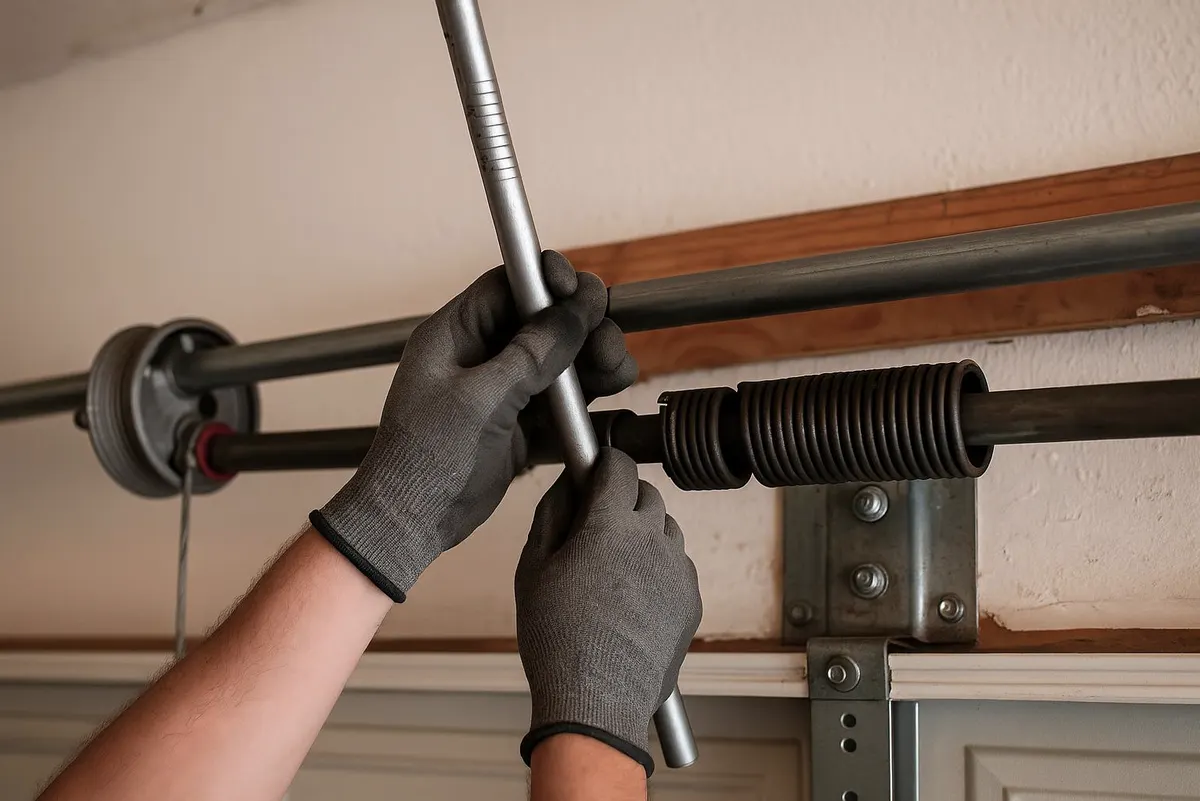
Disconnect the opener by pulling the red release cord, then lift the door by hand halfway up. A properly balanced door should stay put on its own. If it drops like a stone or shoots upward, the springs are worn out, undersized, or mismatched for the door's weight. This is one of the most common things a quick remote test hides completely, and spring replacement is not a DIY afternoon project with the kind of tension these springs carry.
2. Track Condition and Alignment
Walk the full length of both tracks and look for rust pitting, dents, or gaps where the track has pulled away from the wall. In homes closer to the coast, salt air speeds up corrosion on the mounting brackets even when the rest of the door looks fine. Light surface rust is cosmetic; flaking rust or a track that wobbles when the door moves means hardware that's failing structurally.
3. Cable Wear at the Bottom Rollers
Crouch down and look at the cables near the bottom corners of the door. Fraying strands, rust buildup, or a cable that looks slack on one side and taut on the other are signs of uneven wear. A cable that snaps mid-cycle can let a door drop unevenly or come off track entirely.
4. Panel Condition, Especially at the Bottom
Humidity and standing water take a toll on steel and wood-composite panels over time. Check the bottom panel closely for swelling, bubbling paint, or soft spots, all signs of moisture getting into the panel material. Also check for delamination, where the outer skin separates slightly from the insulation core. A panel with early swelling might just need monitoring; one that's soft or crumbling needs replacing before it fails during a storm.
5. Auto-Reverse Safety Function
Place a 2x4 flat on the ground where the door closes and run a close cycle. The door should reverse immediately on contact. If it doesn't, the safety sensors or the opener's force settings are out of adjustment, which is both a safety issue and a sign the opener may need service or replacement.
6. Weatherstripping and Bottom Seal
Look along the bottom edge and sides for cracked, flattened, or missing rubber seals. Gaps here let wind-driven rain in during afternoon downpours and give pests an easy way inside. This is a cheap fix, but a seller who's let it go that long may have skipped other maintenance too.
7. Wind-Load Rating and Reinforcement
Check the inside of the door for a manufacturer's label noting a wind-load or impact rating. In storm-prone areas, a door without reinforcement struts or a wind-rated label may not hold up the way local building standards expect. If there's no visible label, ask the seller for installation paperwork or plan to have it evaluated before hurricane season rolls back around.
8. Noise Under Full Operation
Run a full open-close cycle while standing next to the door, not across the garage. Grinding, popping, or a loud bang partway through the cycle points to a worn roller, a spring under uneven tension, or an opener gear that's close to stripping. Quiet operation end to end is a good sign; anything metallic or jerky is worth flagging before closing on the house.
When to Call Grandridge Garage Door Pro
If the balance test fails, the cables show wear, or you're not sure whether the door is actually storm-ready, that's the point to bring in a technician before you move your first box in. We handle garage door spring repair when tension is off or a spring has failed, and off track door repair when the alignment has drifted enough to bind or pop out of the track. For a home you're about to buy, a tune-up and inspection can also catch smaller issues, like a sensor out of alignment, before they turn into a service call during the next big storm.
If you're buying a home in Grandridge, Sneads, Marianna, Cottondale, Chattahoochee, Bascom, or Cypress and want a second set of eyes on the garage door before closing, call Grandridge Garage Door Pro. We'll walk the door with you, tell you straight what's fine and what isn't, and get it handled before moving day.