
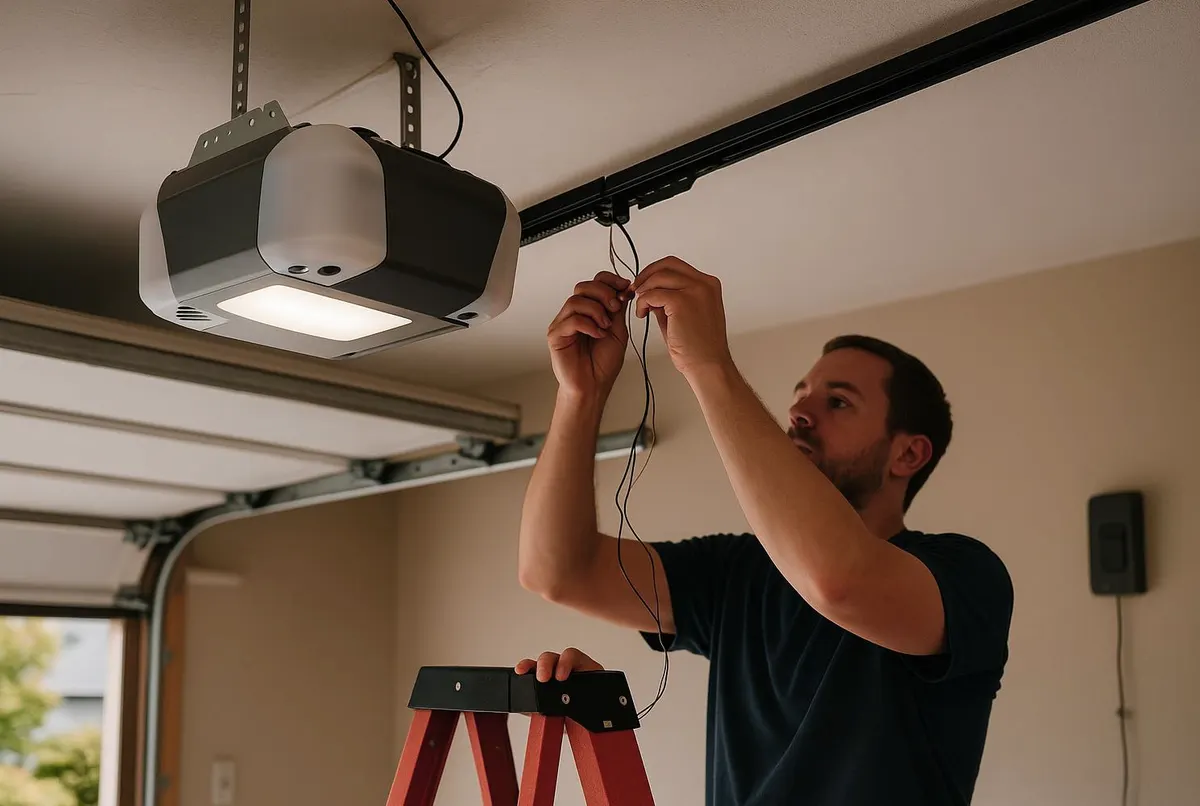
The Morning It Won't Move Right
You hit the opener button on your way out and the door hesitates, groans, or crawls up a few inches before stalling. Maybe it won't budge at all until you give it a shove by hand, or the bottom seal seems glued to the slab and peels away with a tug. It's usually one of those mornings after a stretch of humid afternoon downpours followed by a real cold snap overnight, the kind Jackson County gets a handful of times each winter. The door that worked fine in August suddenly feels like it's fighting you.
What You're Probably Noticing
- The door moves slower than normal, especially in the first foot of travel
- A grinding or squealing sound from the rollers or tracks
- The opener motor straining, clicking, or reversing on its own
- The bottom edge sticking to the concrete floor before it breaks free
- The door looking slightly crooked or binding on one side as it opens
None of these mean you need to panic, but they're worth sorting out before cold mornings become a daily habit through the rest of winter.
What's Actually Causing It (In the Order a Technician Checks)
1. The Bottom Seal Stuck to the Slab
This is the first thing worth looking at, since it's the most visible. Florida humidity swells rubber weatherstripping, and when a warm, damp evening is followed by a cooler night, that swollen seal can press flat against the concrete and tack itself down, almost like it's frozen even though there's no ice involved. The fix is simple: clean the seal and the slab contact strip, let both dry fully, and apply a silicone-based lubricant (not petroleum-based, which attracts grit) along the seal's edge so it releases cleanly next time.
2. Dried-Out or Gummed-Up Lubrication
Next, a technician checks the hinges, rollers, and torsion spring coils. Lubricant applied months ago during humid season often picks up dust and pollen, then hardens into a gritty film once temperatures drop. That film adds resistance exactly where the door needs to move smoothest. The fix is a full clean-and-relube of hinges, rollers, and springs with a garage-door-rated lubricant, not WD-40, which evaporates fast and leaves parts dry again within days.
3. Track Alignment Thrown Off by Moisture
Wood door frames and jambs in this climate absorb moisture during wet stretches and swell slightly, which can nudge the track out of true alignment by a fraction of an inch. That's often enough to make the door bind or scrape as it travels. A technician checks the track with a level, loosens the mounting brackets, and resets the gap so the rollers run freely without forcing the door sideways.
4. Worn or Stiff Rollers
Nylon rollers that have been riding slightly misaligned tracks for a while develop flat spots or stiffen when temperatures drop. They're the next thing checked because they're a common source of grinding noise. Replacing worn rollers with new nylon ones, rather than metal, cuts down on both noise and future rust risk in this humidity.
5. Spring Tension That's Drifted
Torsion springs lose a bit of flexibility in cooler temperatures, and if the tension was already borderline, a cold morning is when it finally shows. A technician checks how evenly the door balances when manually released from the opener. If it's noticeably heavy on one side or doesn't hold position halfway up, the spring tension needs adjusting or the spring may be nearing the end of its life.
6. Opener Settings and Gear Wear
Last, the opener itself gets checked, specifically the limit and force settings and the condition of the drive gear or belt. If the opener has been compensating for a stiff door for weeks, it may have drifted its force settings too high or started stripping a plastic drive gear, which shows up as grinding with little actual movement.
When to Call Grandridge Garage Door Pro
If lubrication and a seal cleaning don't fix the sluggishness, or the door still binds and makes noise after a quick home check, it's time to call in a technician. We handle garage door tune-up and maintenance visits that cover lubrication, track alignment, and roller inspection in one trip, and if the issue traces back to spring tension, we handle garage door spring repair on the spot with the right tools for a safe adjustment.
If your garage door in Grandridge, Marianna, Sneads, or anywhere nearby is sticking, groaning, or crawling along the track this season, give Grandridge Garage Door Pro a call and we'll get it moving smoothly again before winter settles in.